Rovinj was an island until the 18th century, when the narrow channel separating it from the Istrian mainland was finally filled in, and the town's tightly packed, pastel-coloured houses still climb a hill exactly as if the sea still surrounded them on every side. St Euphemia Church crowns that hill with a baroque bell tower modelled on St Mark's in Venice, visible from well out to sea and the clearest orientation point in town.
Below the church, the old town's narrow lanes fan out toward the harbour, none more photographed than Grisia, a cobbled street lined with artists' studios and an open-air art show every August. Rovinj's fishing heritage, still visible in the working harbour and the small Batana boat museum, gives the town a working-port feel that some of Istria's more polished coastal resorts have lost.
St Euphemia Church
St Euphemia, Rovinj's baroque hilltop church completed in 1736, carries a bell tower deliberately modelled on the campanile of St Mark's in Venice, a design choice that reflects the town's long history under Venetian rule. The climb up from the harbour is short but genuinely steep, and the view from the top takes in the old town's rooftops and the scattered islands offshore.
Old Town and Grisia Street
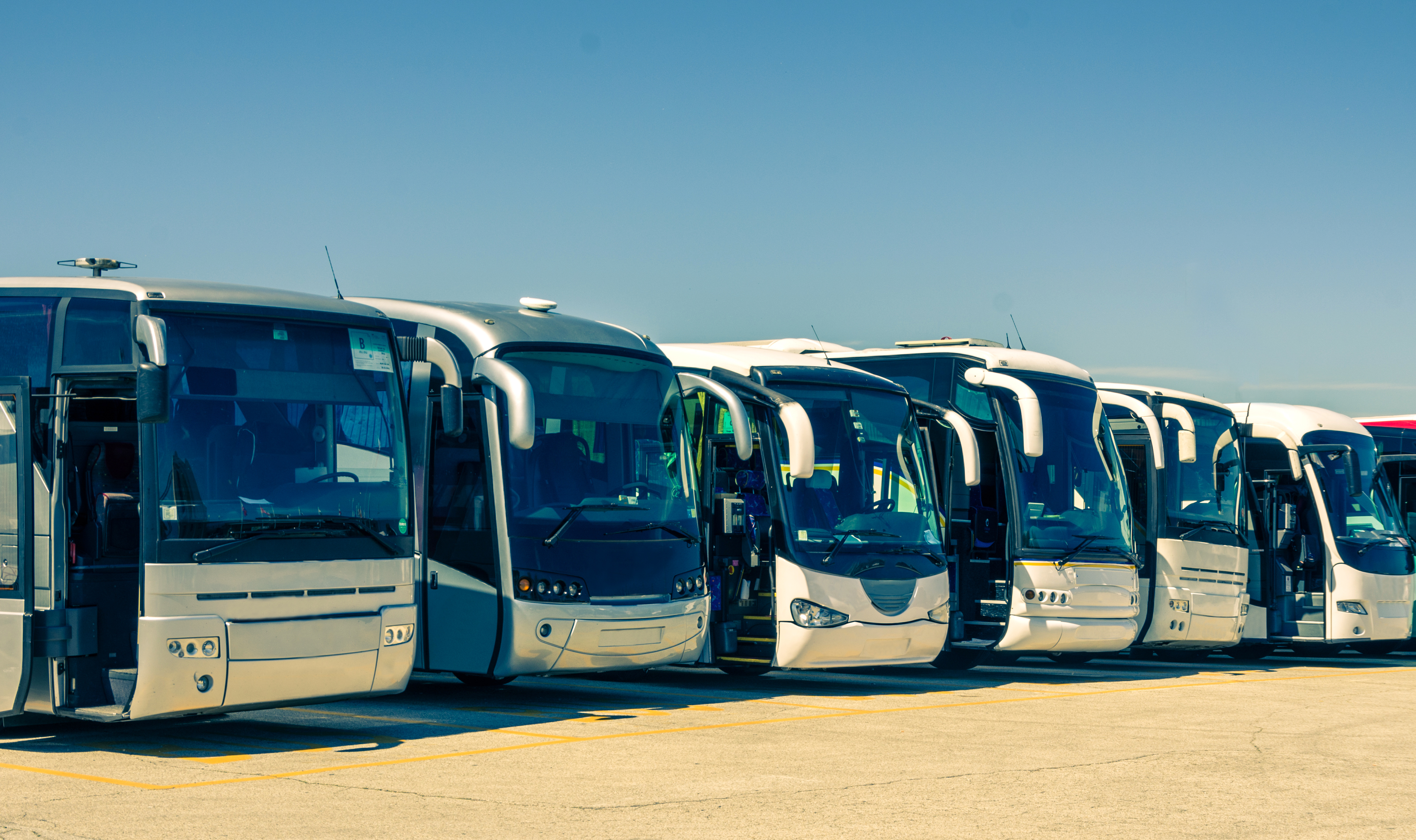
Rovinj's old town, built on what was an island until the 18th century, packs narrow stone lanes and pastel houses onto a single hill, with Grisia the best known of its streets thanks to the artists' studios lining it and the open-air art exhibition it hosts every August. Coaches drop groups at the harbour edge, since the old town's steep, narrow streets are pedestrian-only.
Golden Cape Forest Park and the Batana Boat Museum
Golden Cape (Zlatni Rt), a forested peninsula a short walk south of the old town, mixes Mediterranean pine and cypress with rocky swimming coves, offering a genuinely different pace from the town centre for groups wanting a break between sightseeing stops. Back in the harbour, the small Batana Boat Museum preserves Rovinj's traditional flat-bottomed fishing boat and the working port culture built around it.
What Bus Hire Costs in Rovinj
As a rough guide, a minibus (up to 19 seats) in Rovinj runs around 220 to 390 EUR per day, a midi-coach (around 35 seats) around 360 to 640 EUR per day, and a full-size coach (49 to 55 seats) around 540 to 970 EUR per day. Rovinj tracks close to Pula's pricing given its proximity, with a summer peak driven by its reputation as one of Istria's most photogenic coastal towns. The final figure depends on your route, the date, and how long you need the vehicle. We confirm a fixed price with no hidden charges -- send your details for a free quote.
Quick Facts
- Country: Croatia
- Airport: PUY (Pula, 40km south)
- Currency: EUR (Euro, since 2023)
- Drives on: Right
- Language: Croatian, Italian widely spoken
- Population: approx. 14,000
- Demand: High, peak June to August
More Cities in Croatia | Coach & Minibus Rental
Other Croatian Destinations
Bus Hire in Rovinj: Common Questions
Ready to Book? Get a Free Quote Today
Tell us where you need to go, how many passengers, and when. We will find you the best bus, coach, or minibus at the best price.